Datazag Insights · Research · 15 October 2026
Who Really Runs Business Email?
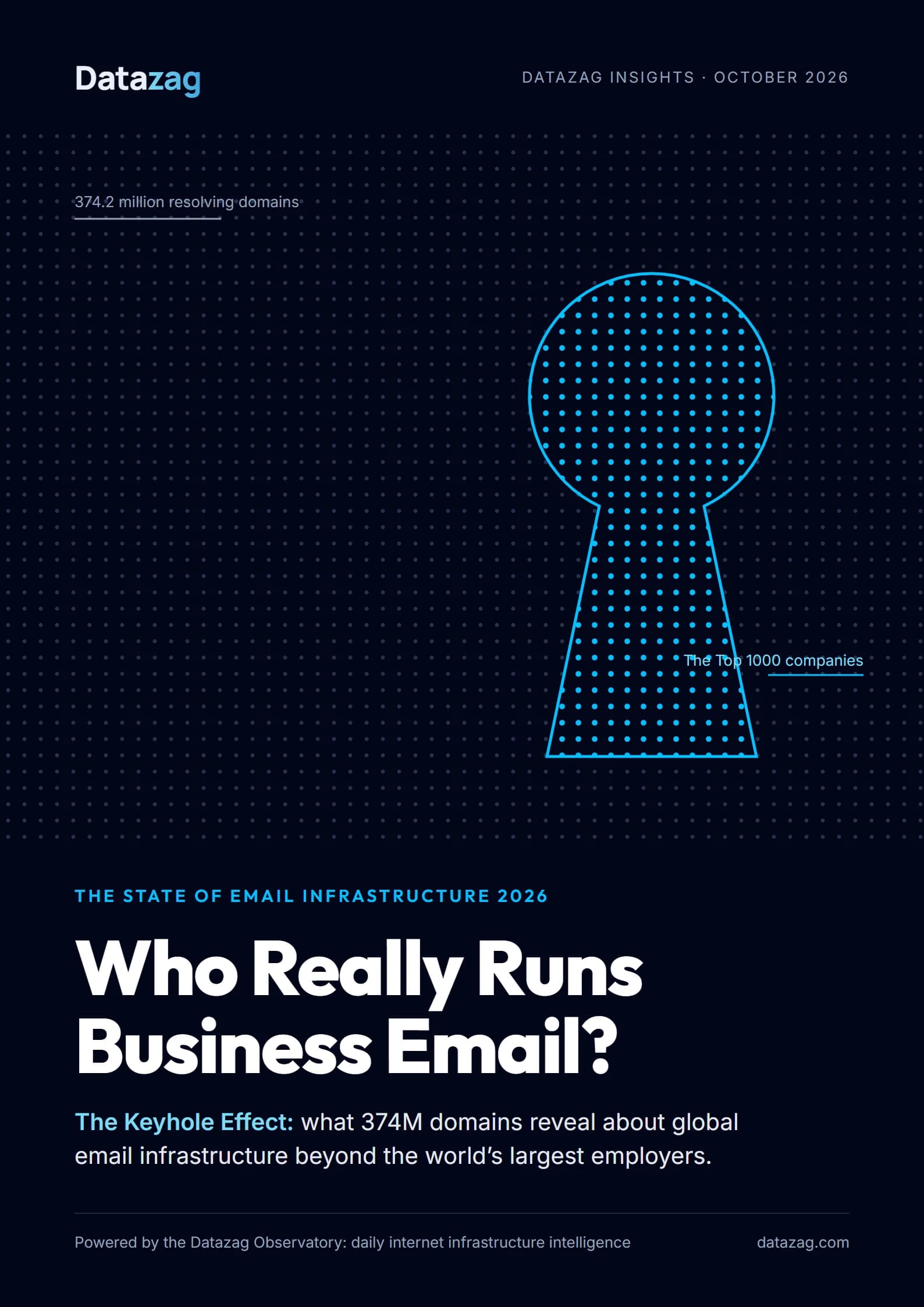
The State of Email Infrastructure 2026. The keyhole effect: how the email infrastructure of the world's largest companies compares with the wider internet.
What we found
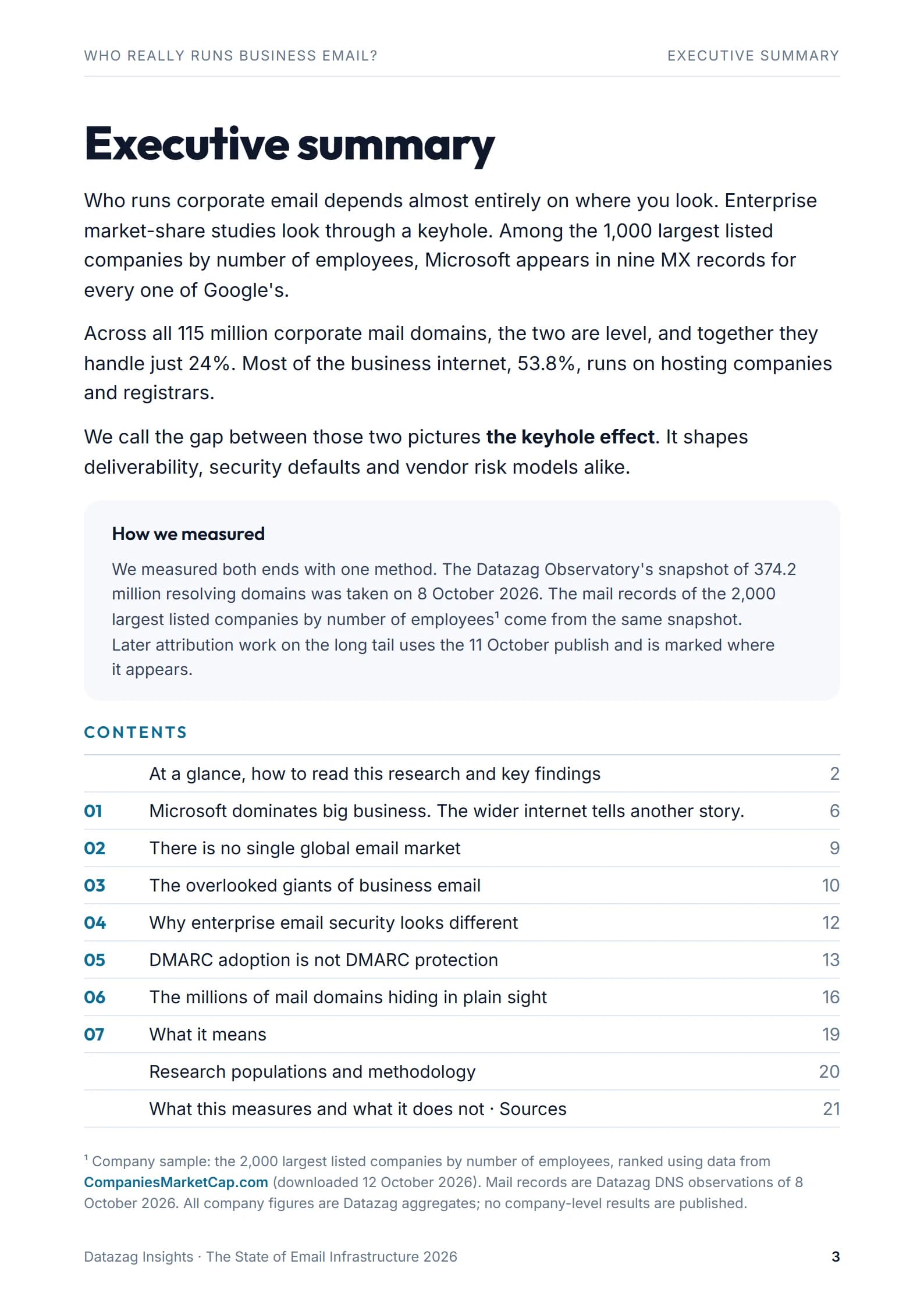
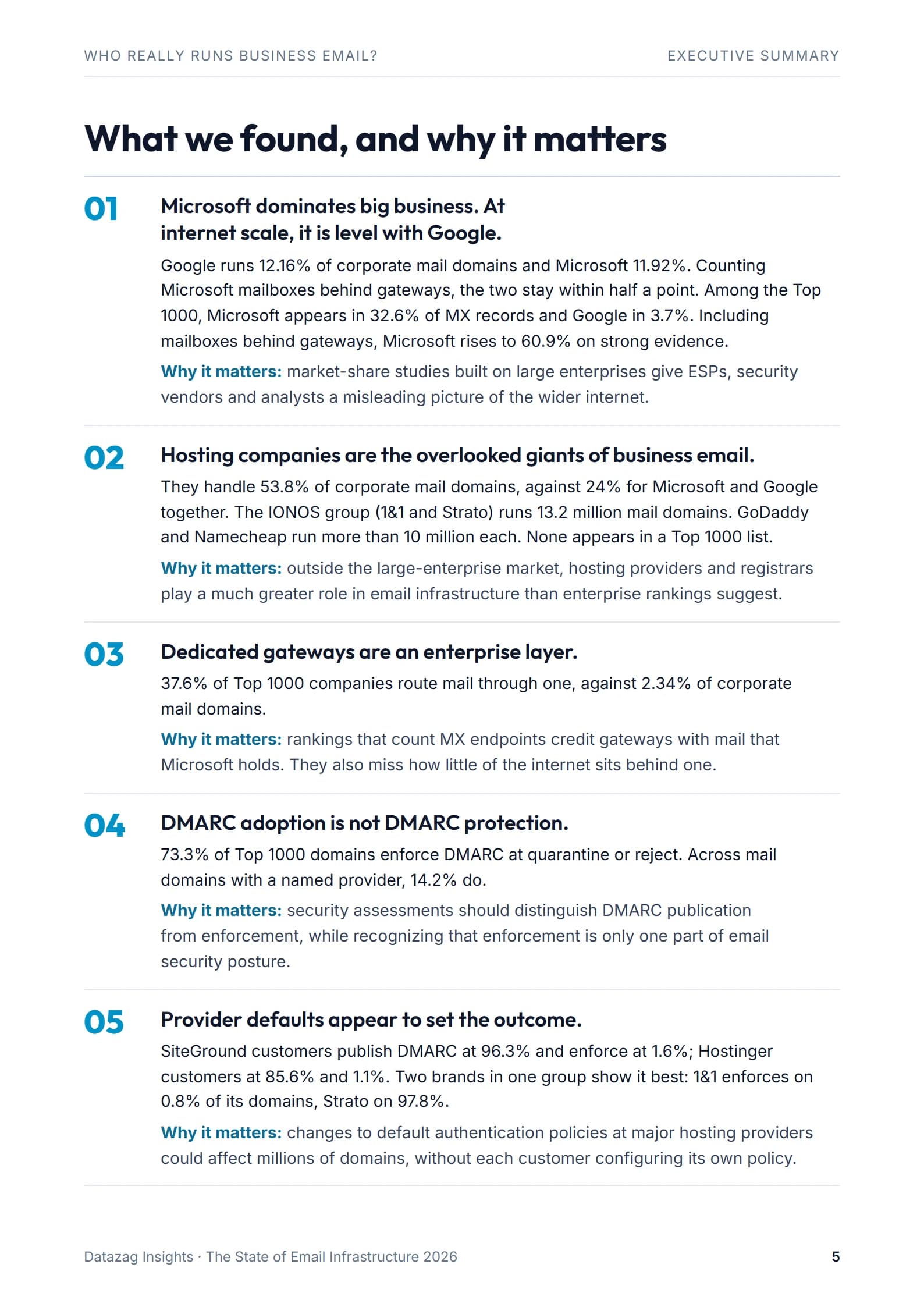
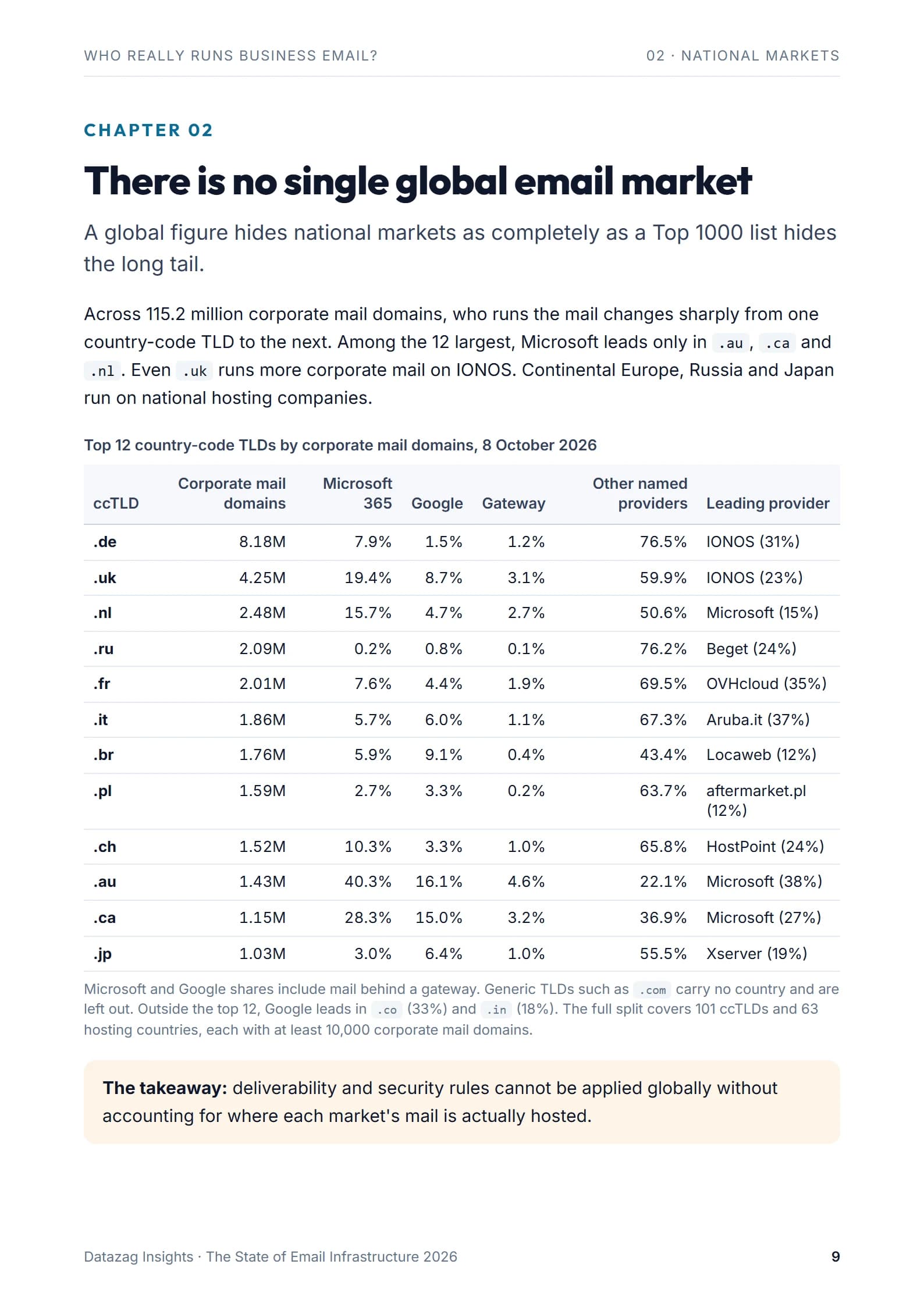
Who runs corporate email depends almost entirely on where you look. Enterprise studies see the world's largest companies. This report also measures the domains around them. We call the gap between those two pictures the keyhole effect.
01
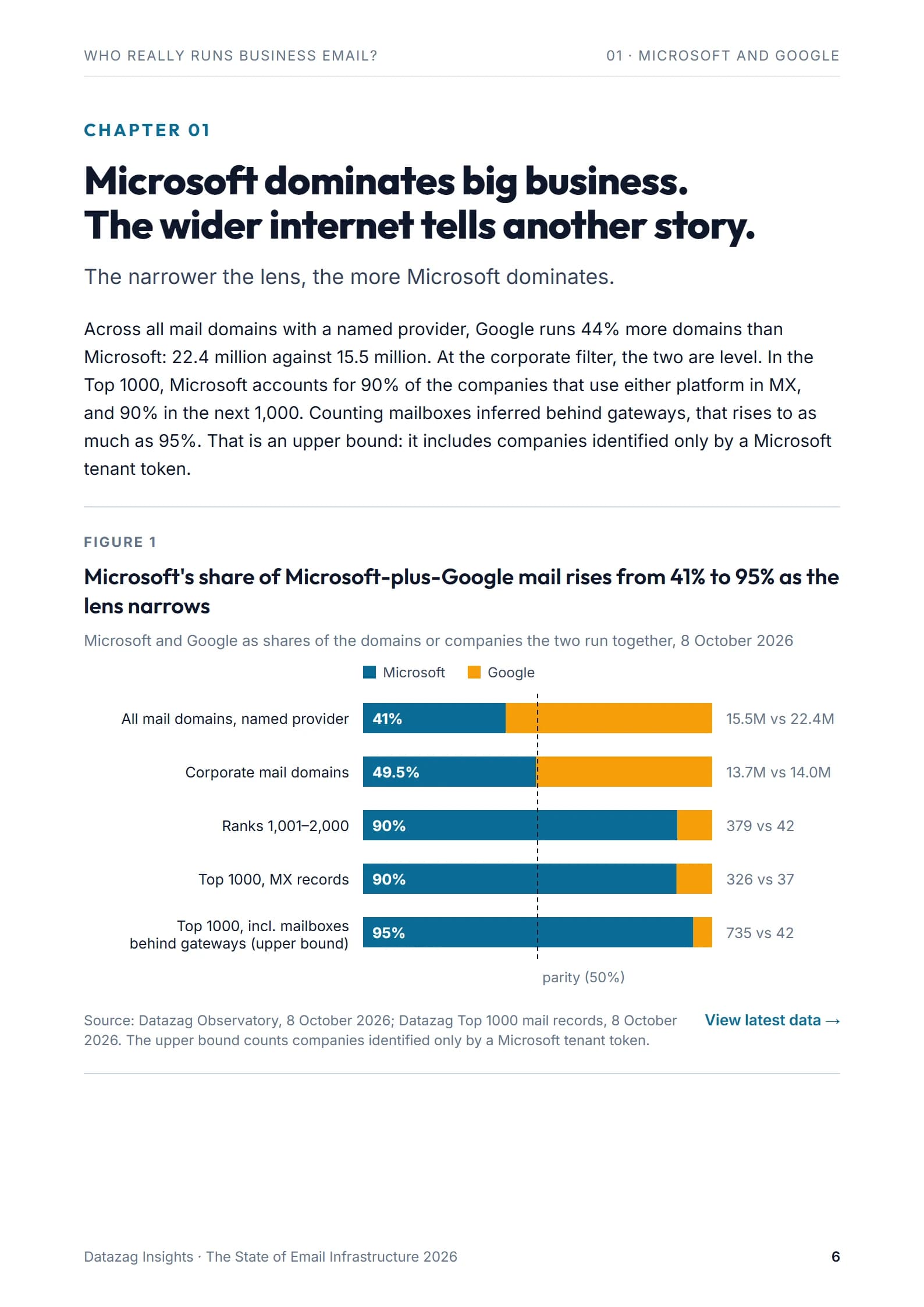
Microsoft dominates big business. At internet scale, it is level with Google.
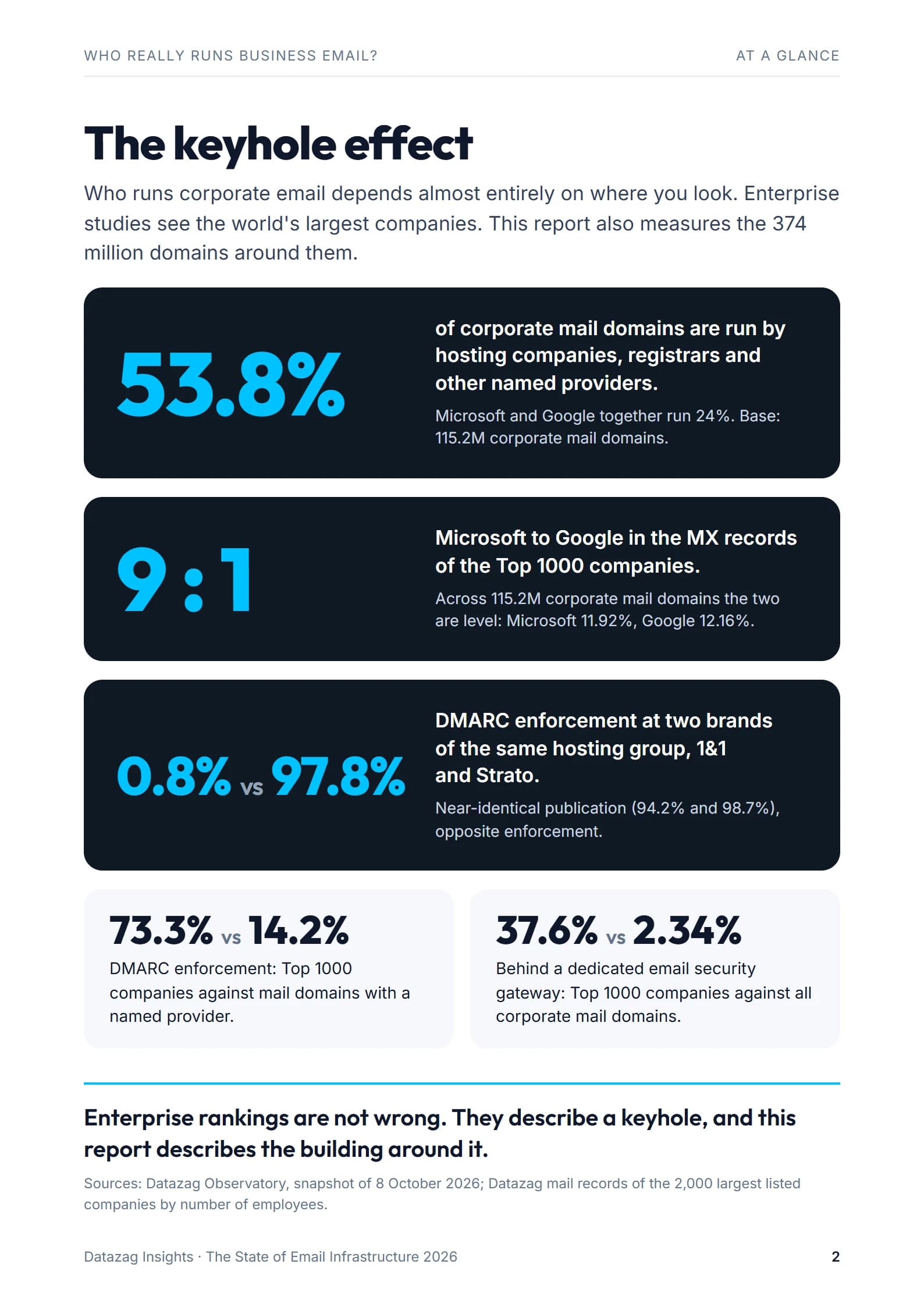
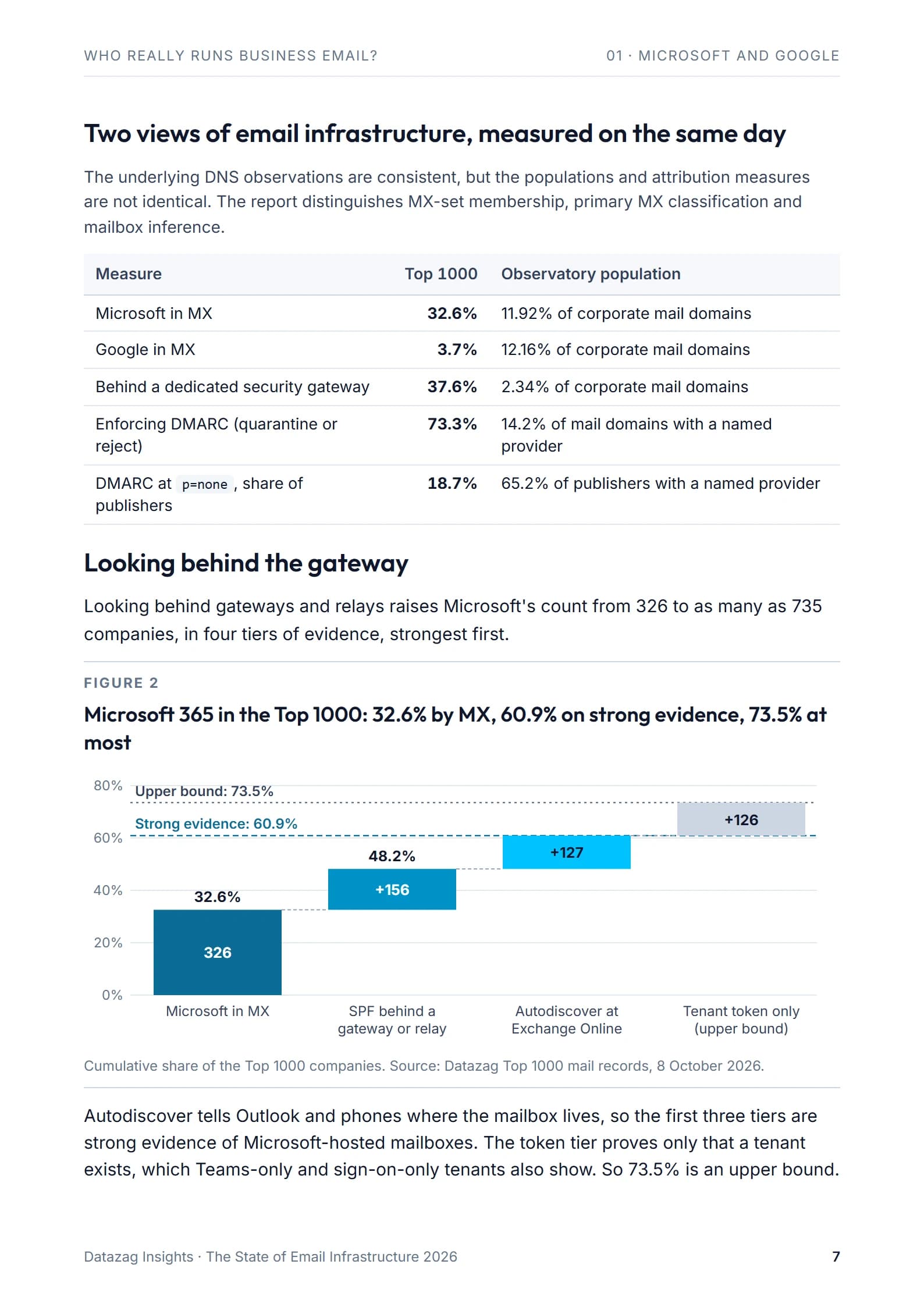
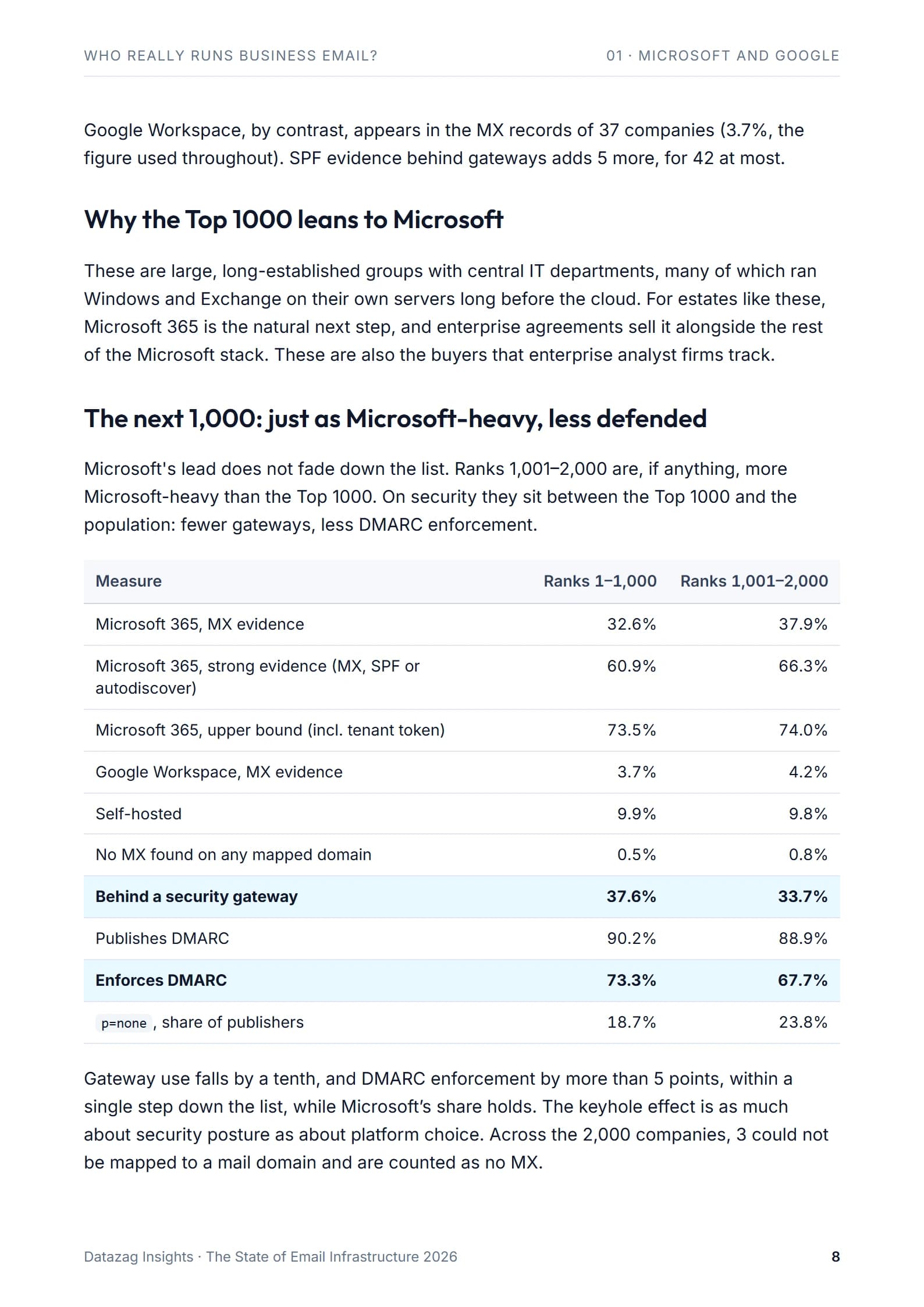
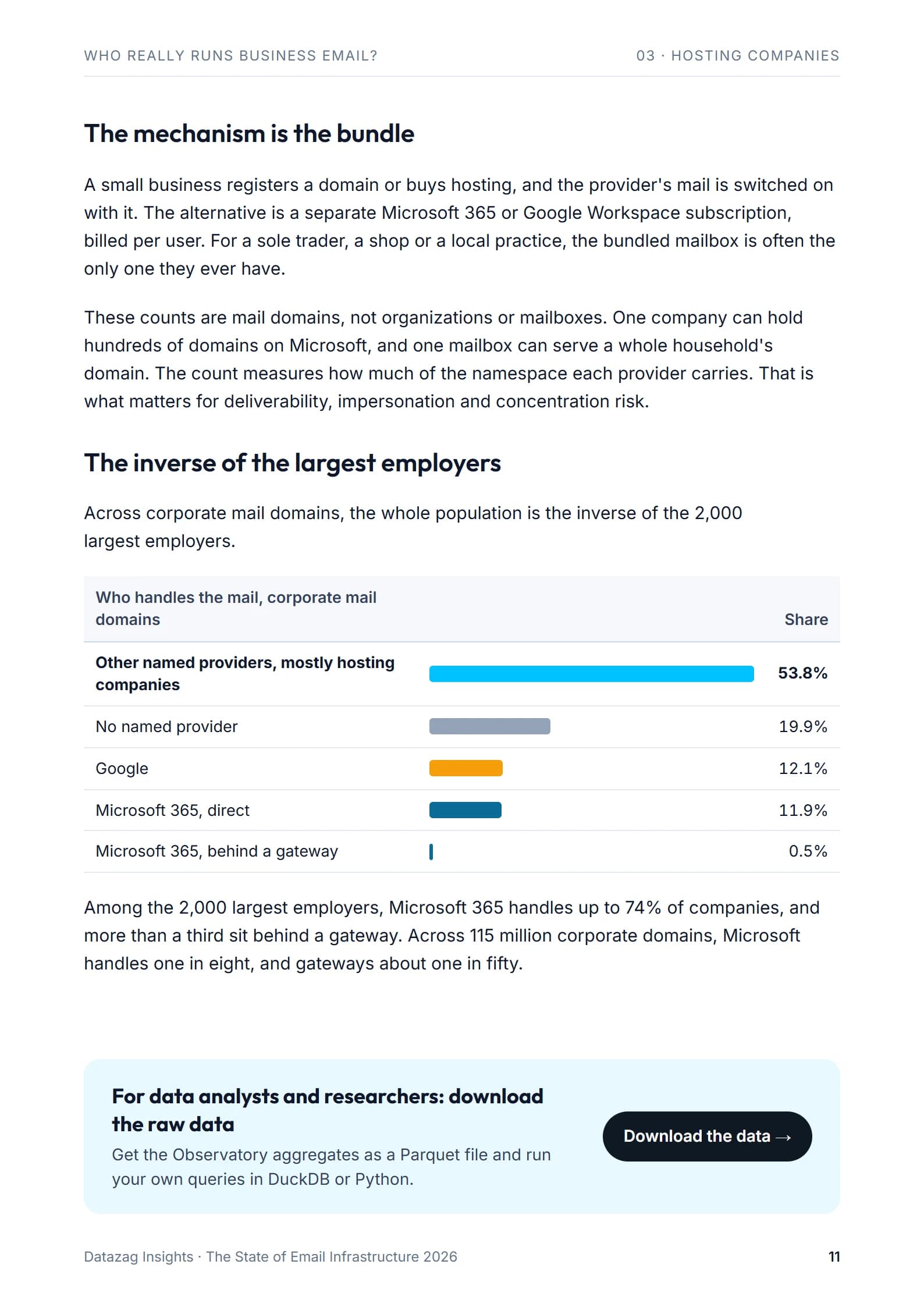
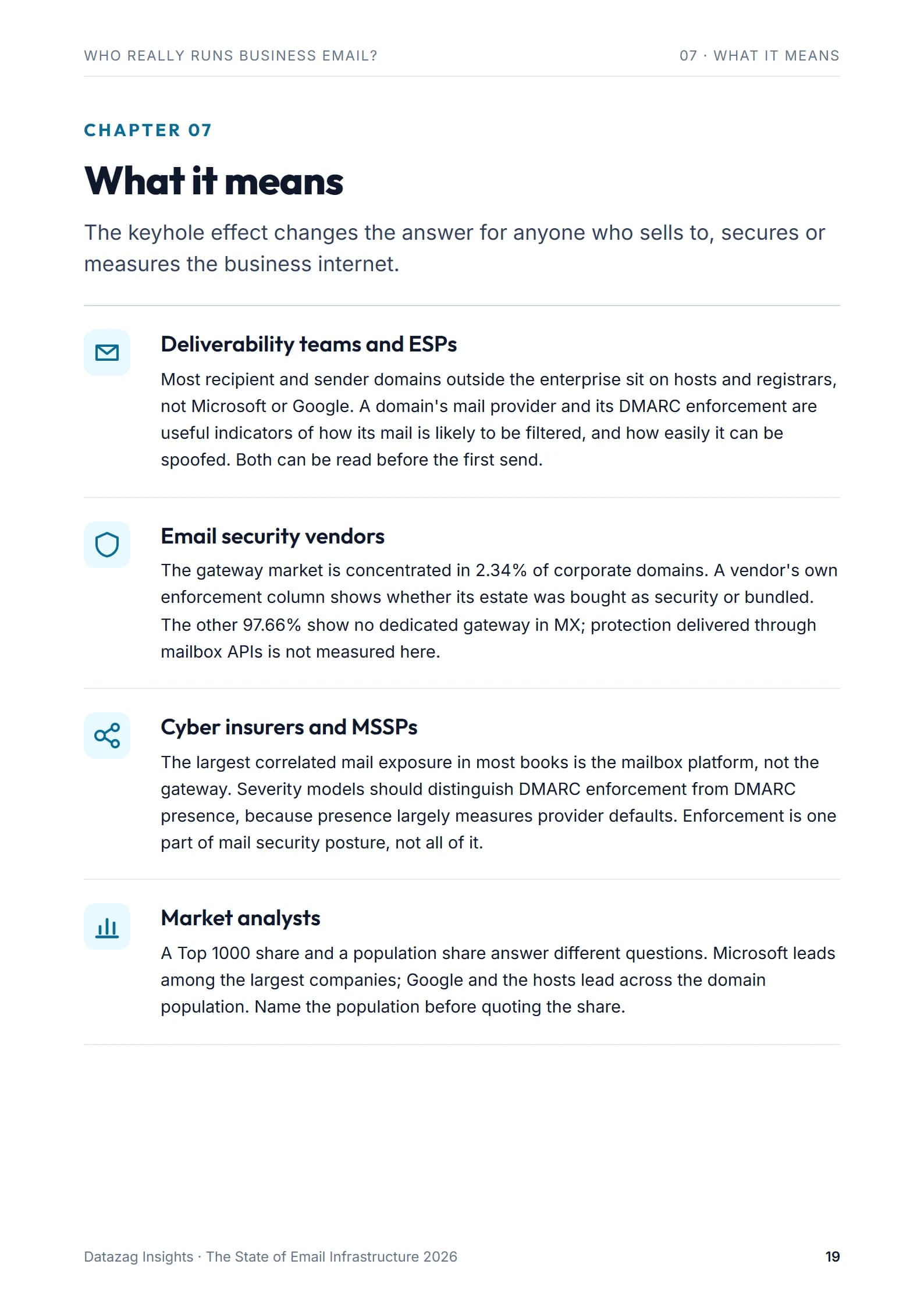
Google runs 12.16% of corporate mail domains and Microsoft 11.92%. Among the Top 1000 companies, Microsoft appears in 32.6% of MX records and Google in 3.7%.
02
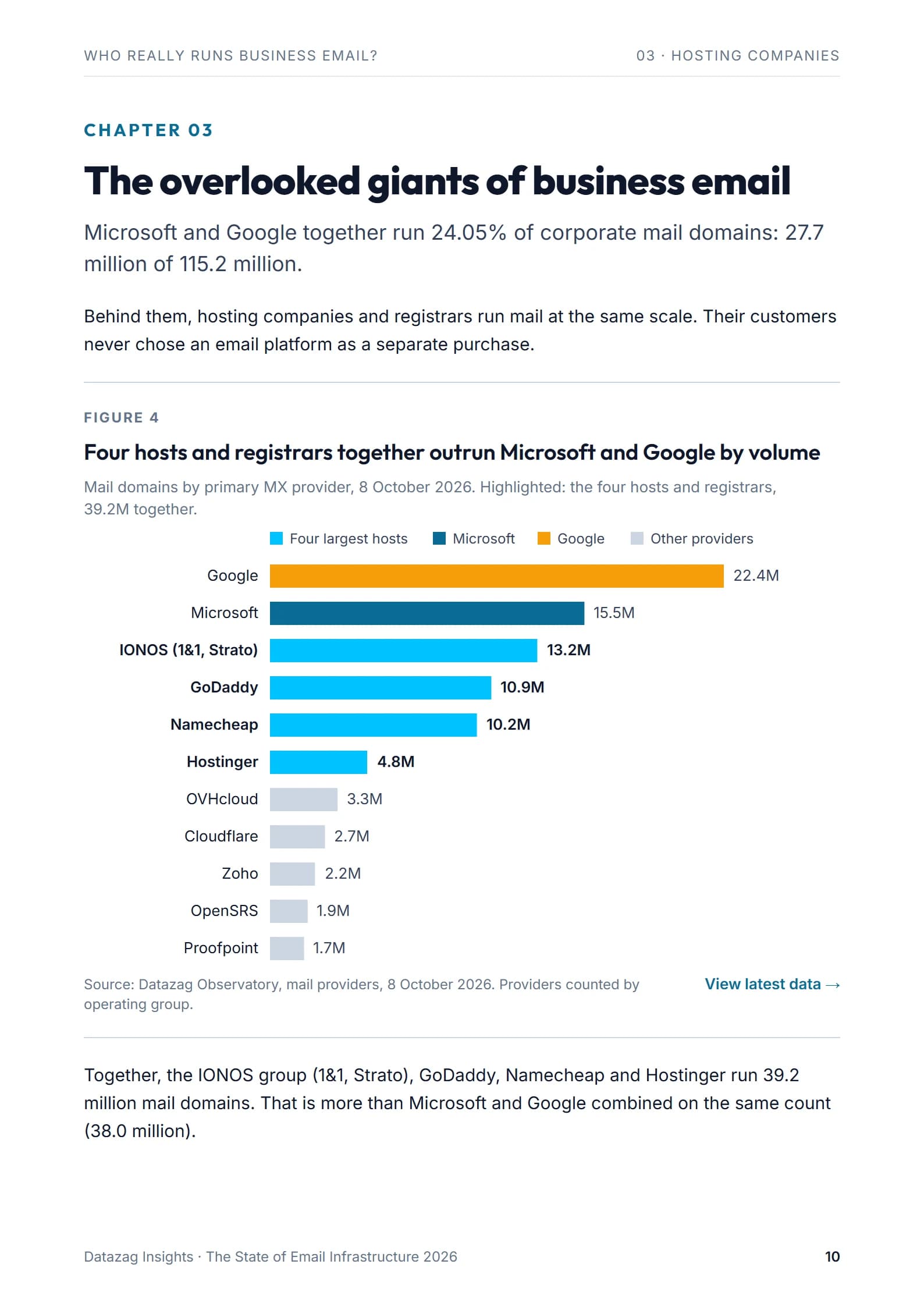
Hosting companies are the overlooked giants of business email.
They handle 53.8% of corporate mail domains, against 24% for Microsoft and Google together. None appears in a Top 1000 list.
03
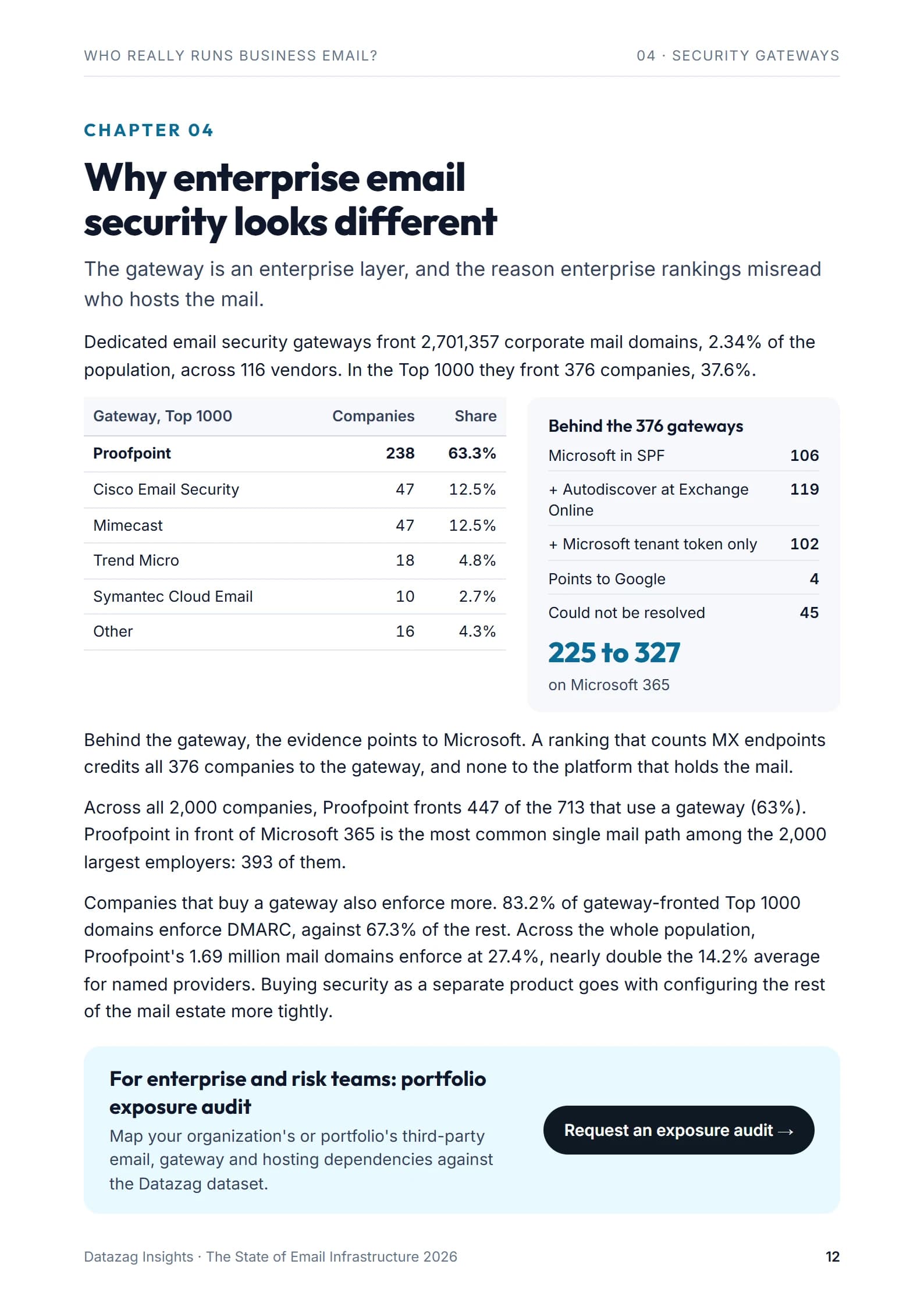
Dedicated gateways are an enterprise layer.
37.6% of Top 1000 companies route mail through one, against 2.34% of corporate mail domains.
04
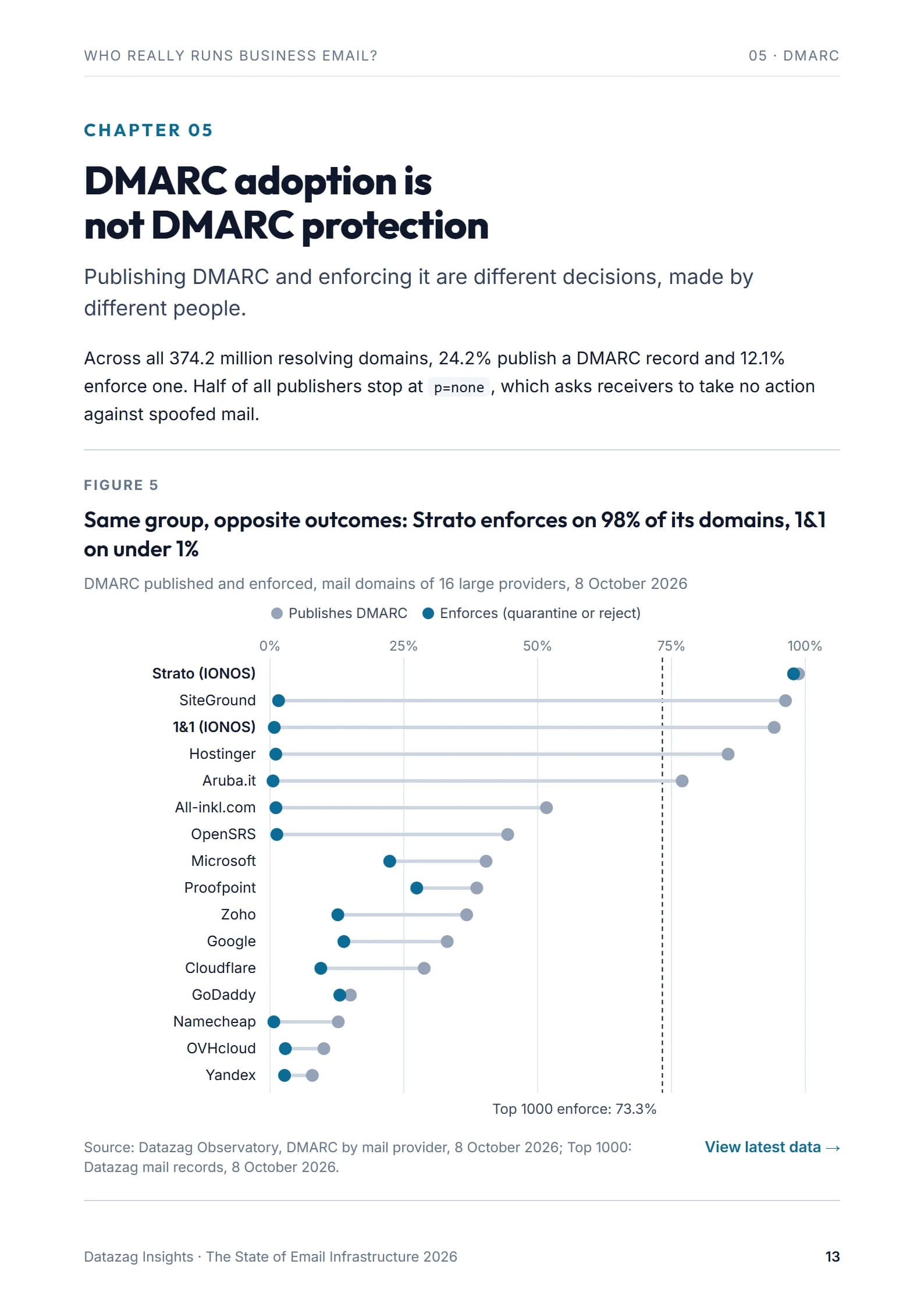
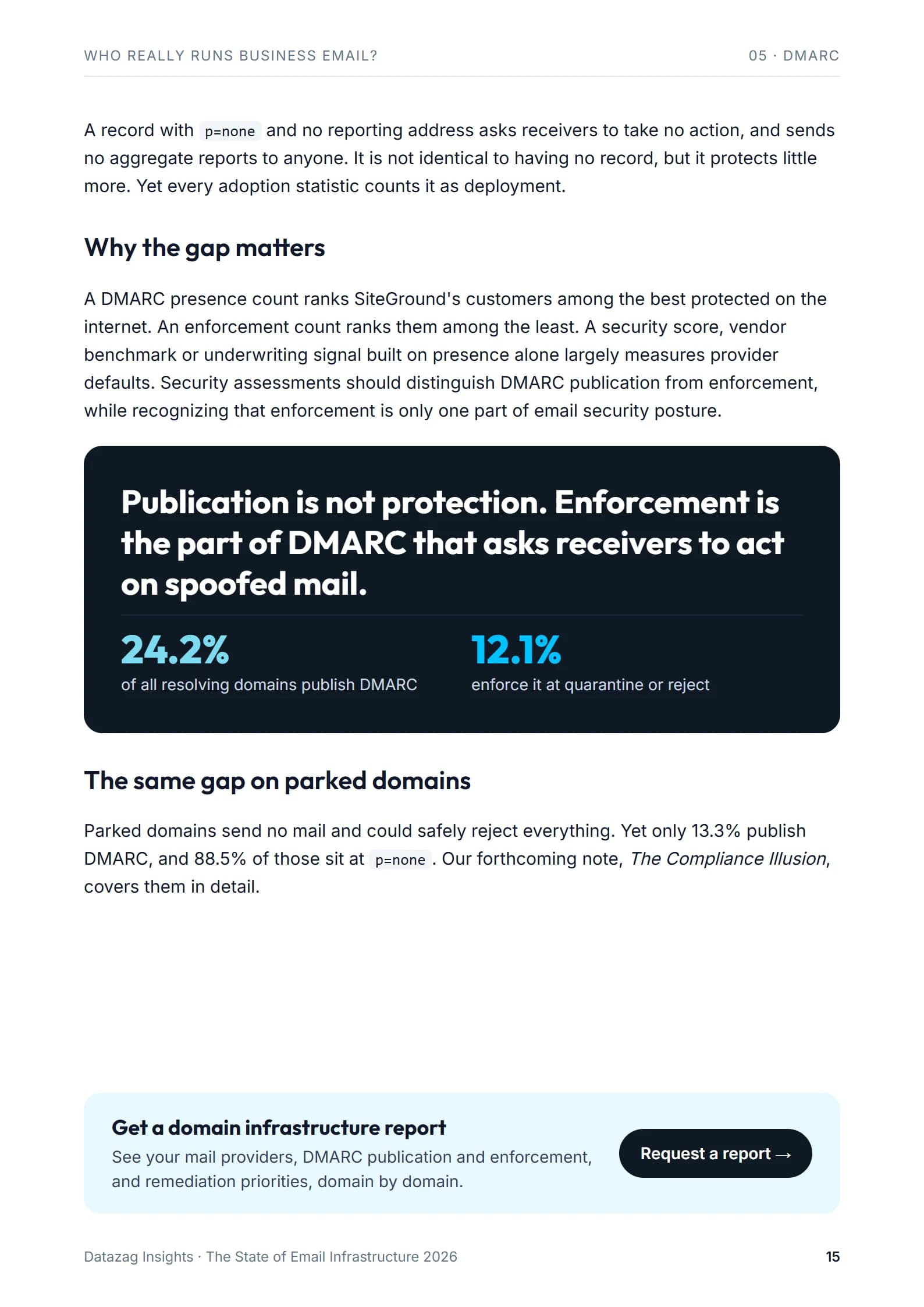
DMARC adoption is not DMARC protection.
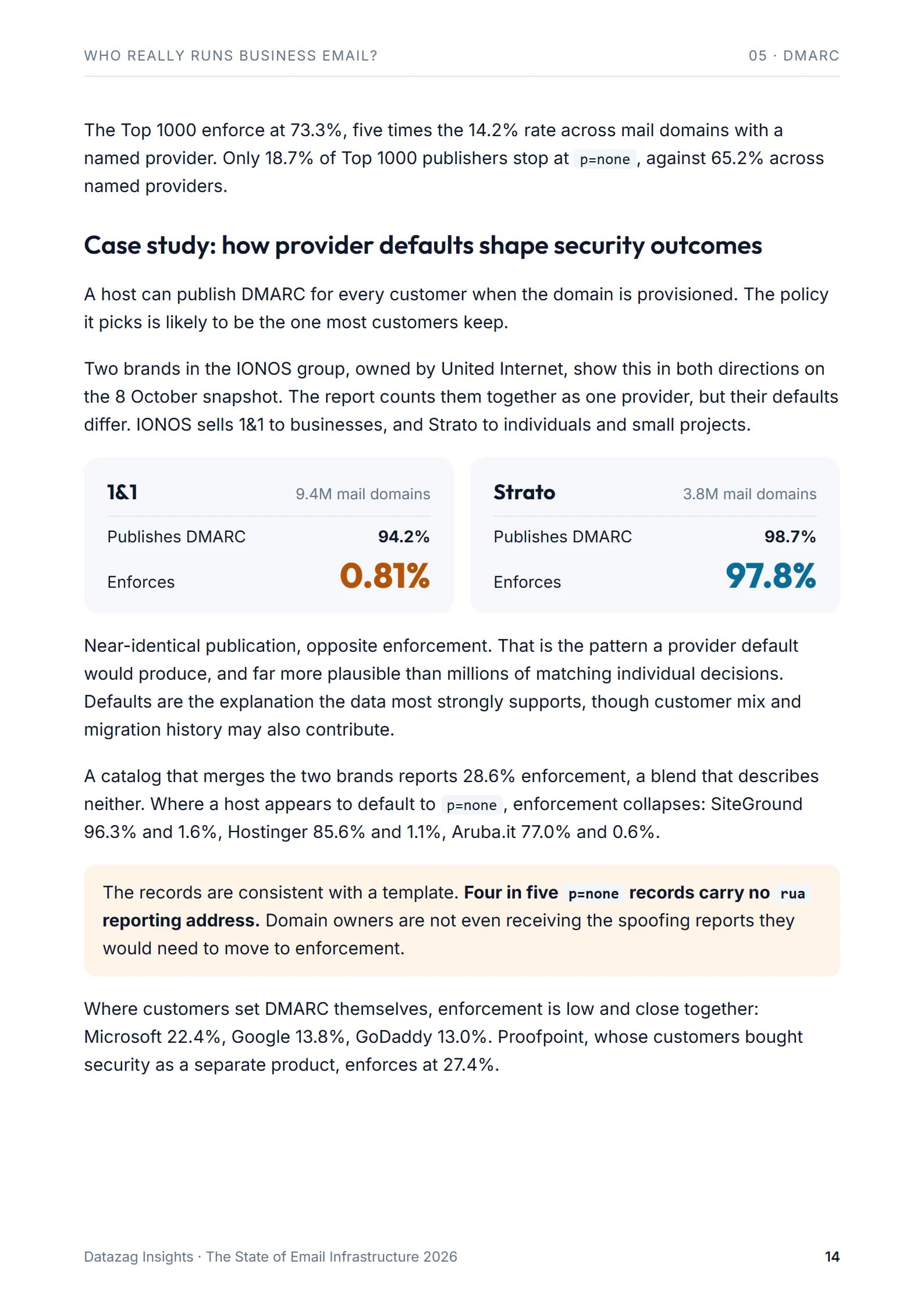
73.3% of Top 1000 domains enforce DMARC at quarantine or reject. Across mail domains with a named provider, 14.2% do.
05
Provider defaults appear to set the outcome.
Two brands in one hosting group show it best: 1&1 enforces DMARC on 0.8% of its domains, Strato on 97.8%.
About the data
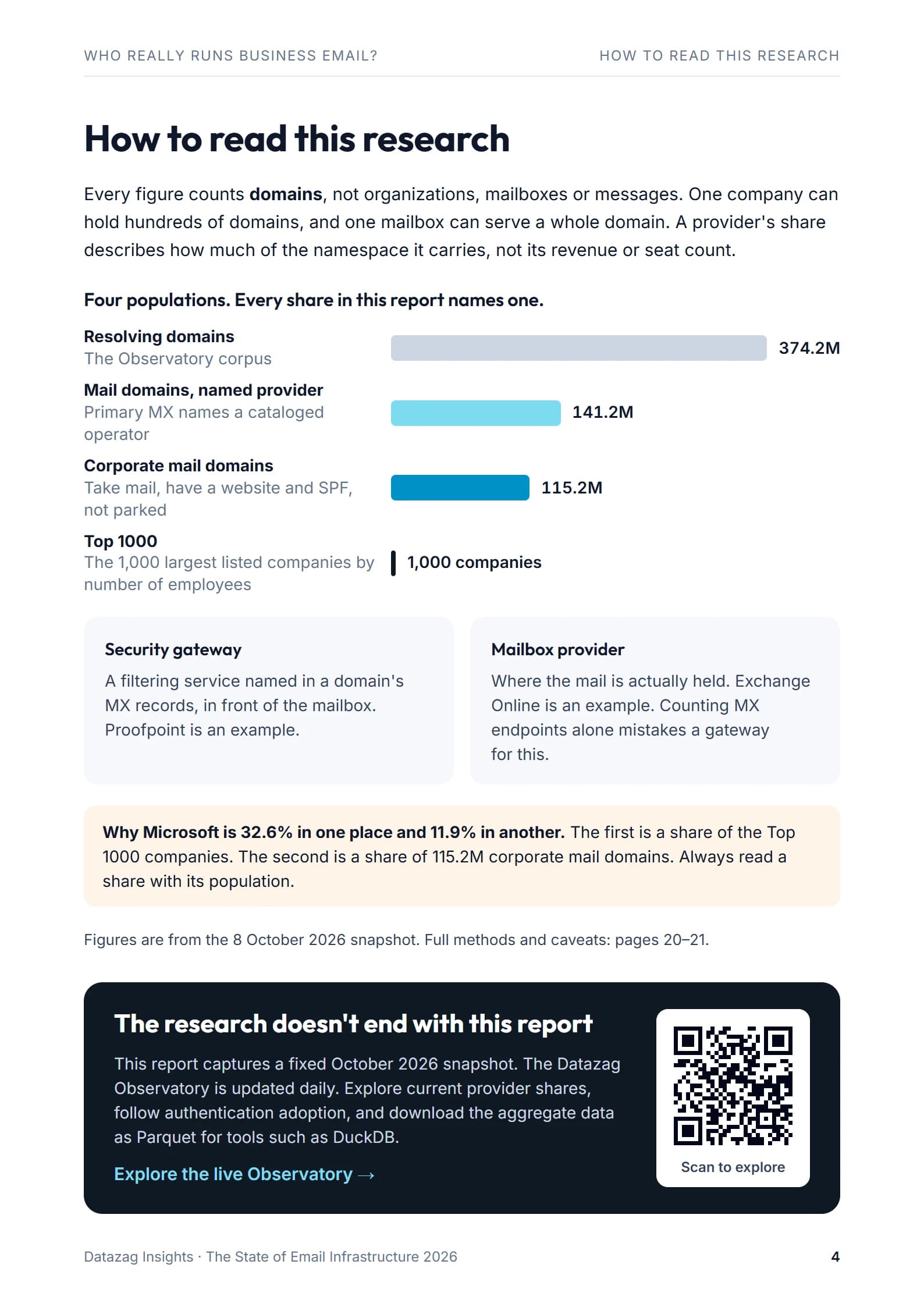
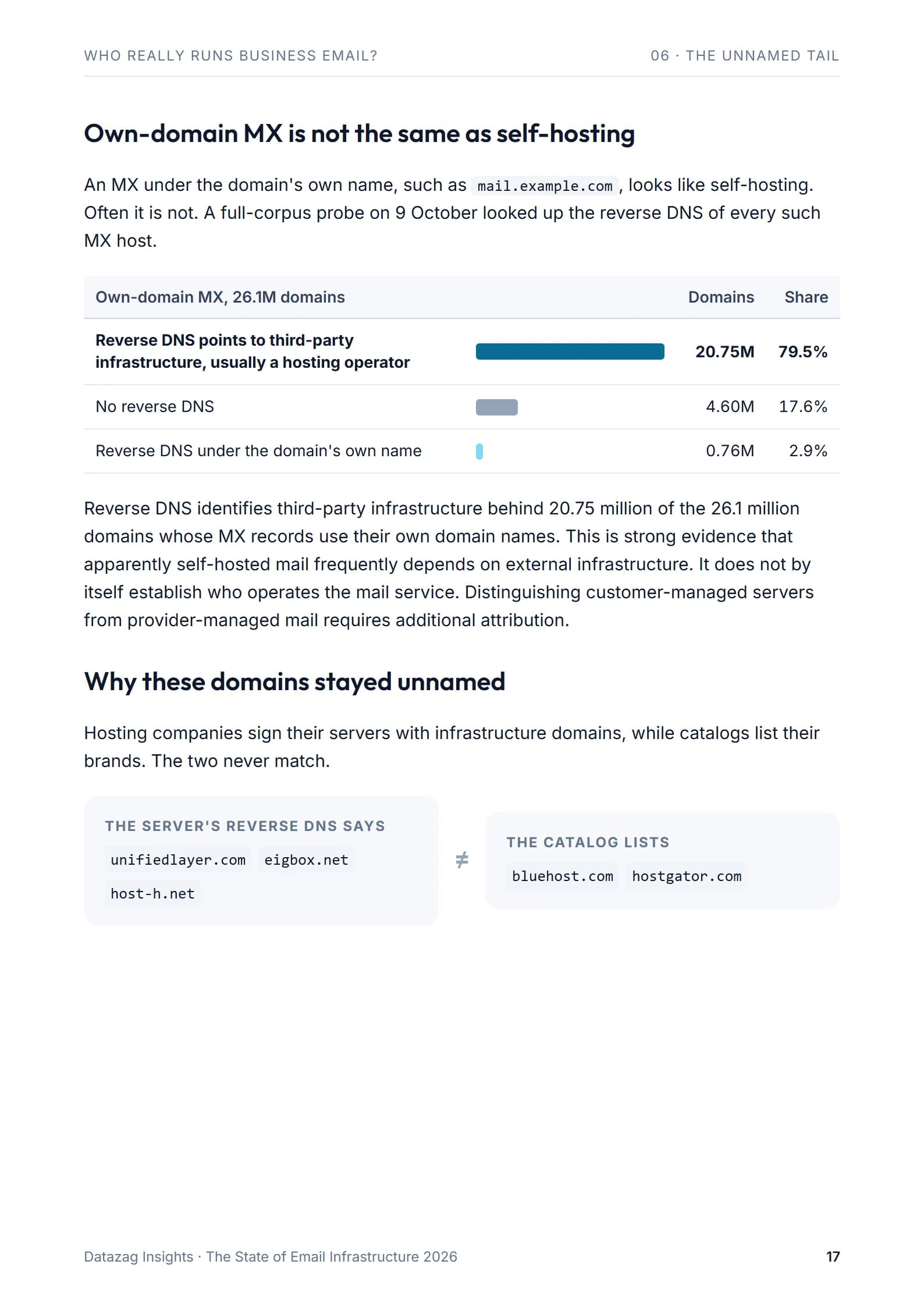
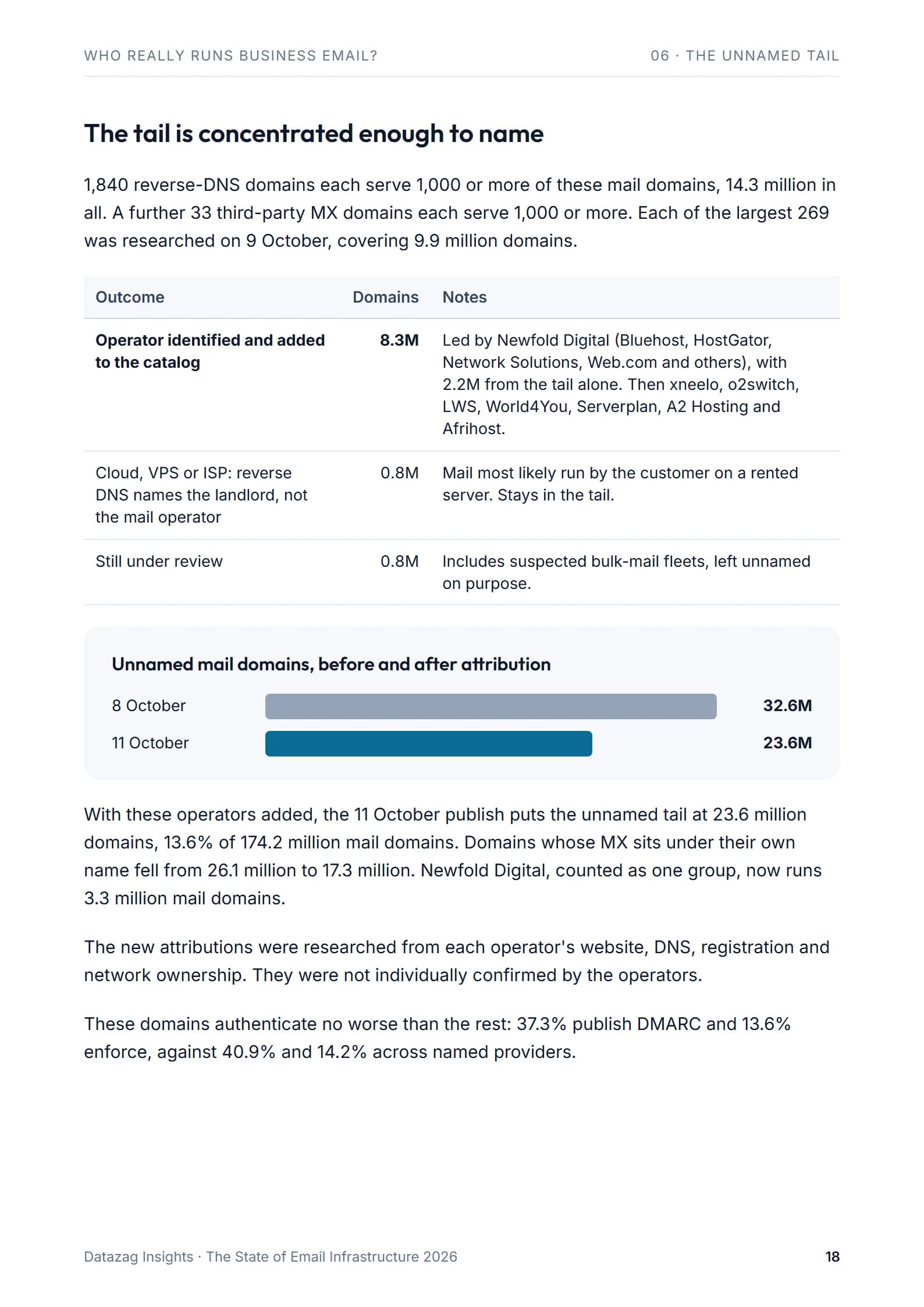
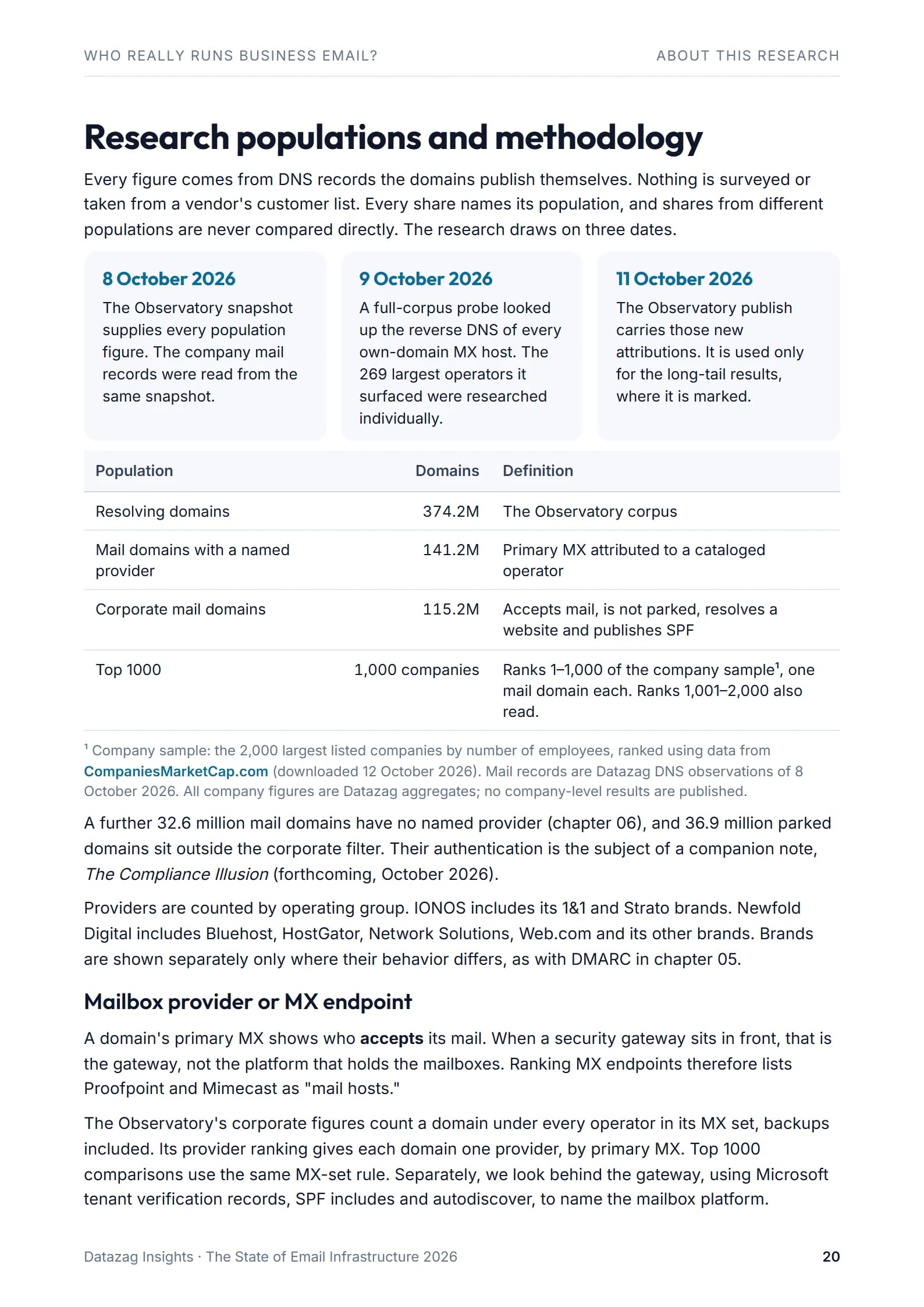
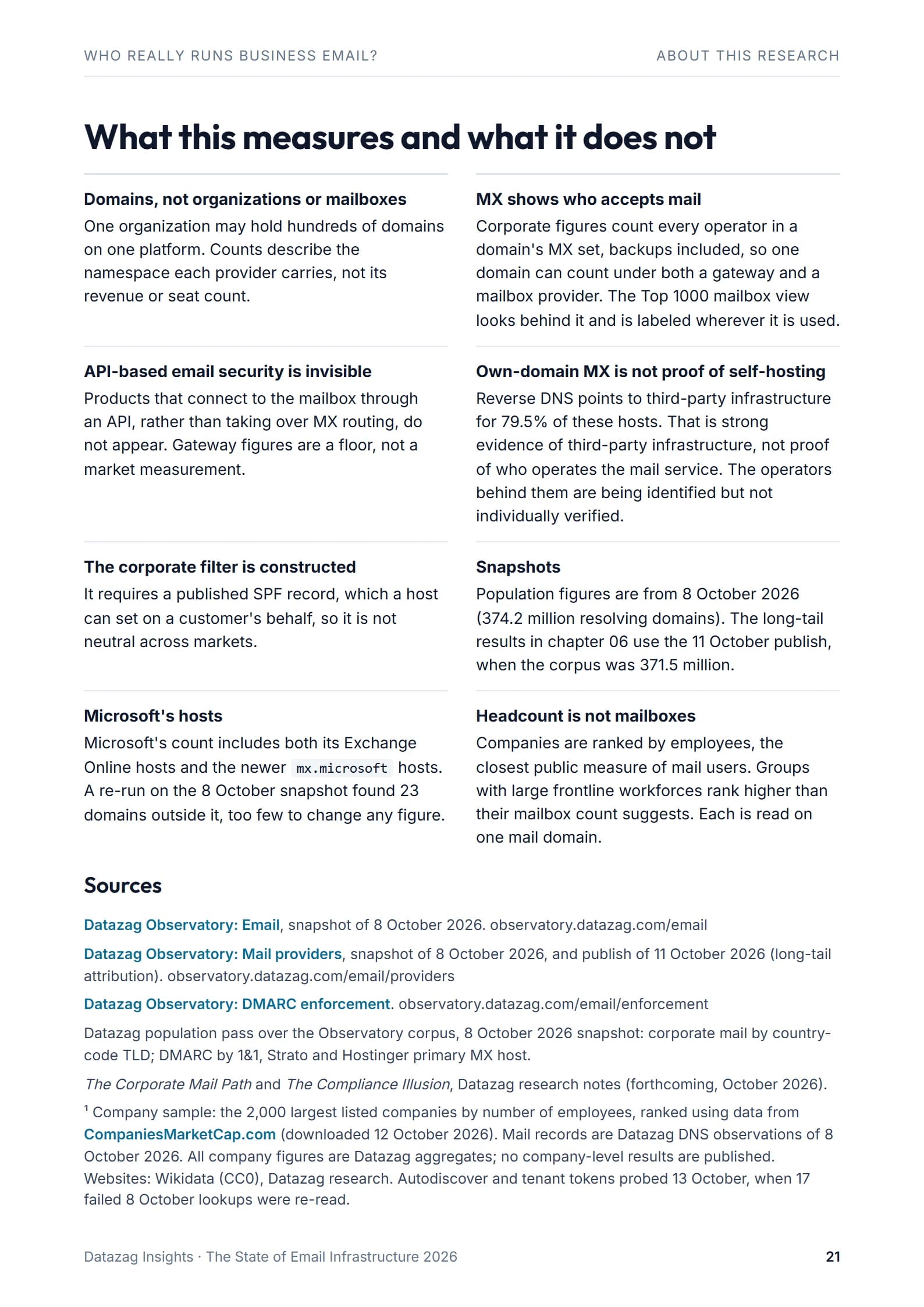
Every figure counts domains, not organizations, mailboxes or messages, and every share names its population. Internet-wide figures are from the Datazag Observatory snapshot of 8 October 2026.
Company figures cover the 2,000 largest listed companies by number of employees, ranked using data from CompaniesMarketCap.com (downloaded 12 October 2026). All company figures are Datazag aggregates; no company-level results are published.
Charts may be reused with Datazag attribution. Current figures are in the Datazag Observatory, updated daily.
Go beyond the snapshot
The Observatory publishes the aggregate figures free, updated daily. Domain-level data is available as datasets for your own warehouse.
More research: Datazag Insights