Detect phishing infrastructure before attacks launch
Real-time alerts when phishing, C2, fraud, and BEC infrastructure targets your brands. Detect during setup (0-2 hour window), not after victims are targeted. Every alert verified in four stages. Complete forensic context with every alert.
Cyber Attacks are Happening in Minutes & Hours not Days
Cyber Defenses need to respond to this new Challenge
Anatomy of a Phishing Incident
Building up the evidence trail from start to finish
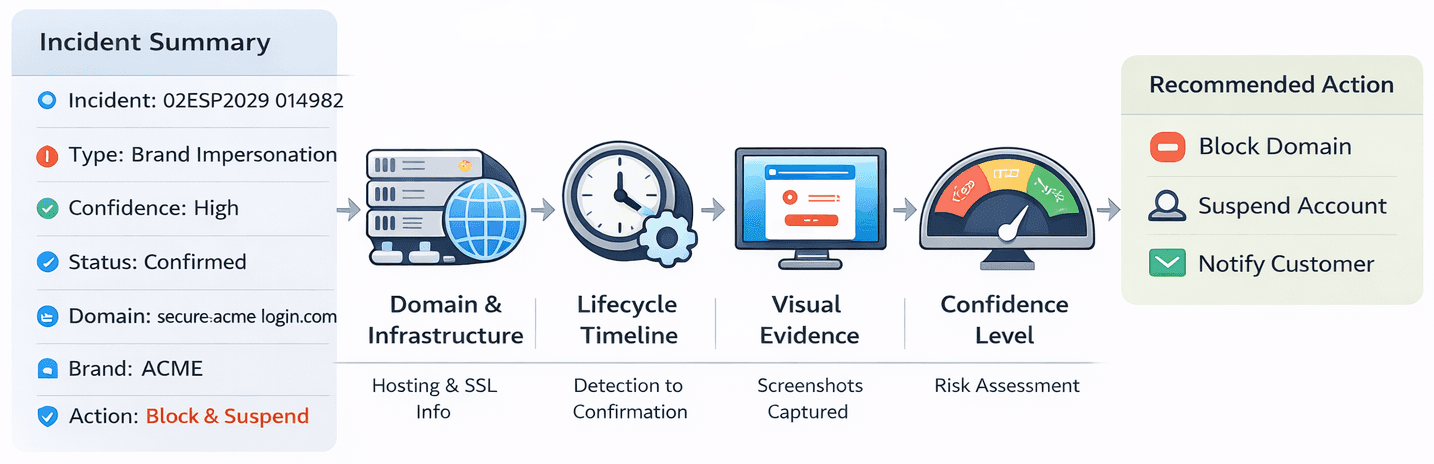
An incident is single structured object showing events from detection to resolution
Infrastructure-level threat detection - before attacks launch
Datazag monitors over 315M domains continuously, detecting threats during registration, DNS configuration, and SSL issuance - in the zero hour window before phishing campaigns start sending.
Real-time alerts
- Phishing & credential harvesting (lookalike domains, brand impersonation)
- Business email compromise (BEC) (executive impersonation, spoofed senders)
- C2 & malware infrastructure (command and control, ransomware callbacks)
- Payment fraud & crypto scams (fake payment sites, wallet draining)
Why this works
- Detect during infrastructure setup (0-2 hour window)
- Every alert verified in four stages (vs. 85-95% false-positive user reports)
- Complete forensic context included (screenshots, WHOIS, DNS, hosting)
- Pushed directly to SIEM (Splunk, Sentinel, Elastic, Chronicle, QRadar)
Multi-brand monitoring
Multi-brand monitoring
- Corporate brands
- Product brands
- Executive names
- Trademark variations
The gap
Phishing attacks don’t appear — they are built
Phishing and impersonation campaigns are assembled step by step using newly registered domains, SSL certificates, DNS, and infrastructure. Most security tools detect them once emails are sent or websites go live. Datazag identifies them before they go live.
We detect suspicious infrastructure during registration, DNS setup, SSL issuance and website setup — reducing triage workload and false positives by prioritizing the domains that matter.
The gap
Four-step detection methodology
Detecting threats in Hour 0-2 (setup), not Hour 8-12 (after attack)
- Certificate Transparency log monitoring (SSL issuance = final setup step)
- DNS configuration tracking
- 315M domains monitored 24/7
- Sub-60-second detection latency
- Visual similarity (screenshots for phishing)
- Domain age and patterns
- Hosting and mail infrastructure
- Brand keyword matching
- Executive name detection patterns
- Infrastructure patterns (C2)
- 15+ signals combined
- Risk scoring (0-100)
- Threat type: Phishing, Impersonation, C2, Fraud
- Priority assignment (P1/P2/P3)
- Confidence scoring
- Campaign attribution
- SIEM integration
- Webhook delivery
- Email with forensics
- Slack/Teams notifications
We detect suspicious infrastructure during registration, DNS setup, and SSL issuance — reducing triage workload and false positives by prioritizing the domains that matter.
The Result - What You See
We don't send raw indicators. We deliver fully enriched phishing incidents your systems can act on immediately.
{
	"alert_id": "evt_882910",
	"timestamp_utc": "2025-10-27T14-05:22Z",
	"verdict": "PHISHING_CRITICAL",
	"triage_priority": "P1",
	"target_intelligence": {
		"brand_detected": "PayPal",
		"intent_keywords": ["verify", "secure", "login"],
		"vertical": "Fintech"
	},
	"infrastructure_forensics": {
		"fqdn": "secure-login-paypal-update.com",
		"is_alive": "true",
		"hosting_provider": "DigitalOcean (AS14061)",
		"hosting_risk_score": 90,
		"mailbox_provider": "Titan Email (Free Tier)",
		"hidden_origin": "cpanel-host-44.bad-actor.net"
	},
	"mismatch_analysis": {
		"brand_infrastructure_match": false,
		"brand_mailbox_match": false,
		"is_defensive_registration": false
	}
}
P1 verdict included
Your SOC and automated systems can escalate immediately without manual triage.
Brand scoped context
Instead of shared infrastructure you get your own dedicated feed tuned to the brands you want to monitor
Infrastructure forensics
Hosting, ASN, mailbox provider and origin signals included for fast investigation.
Mismatch Logic
Clear mismatch flags between phishing candidates and trusted brands reduce noise and help drive low false positive workflows.
False positive reduction
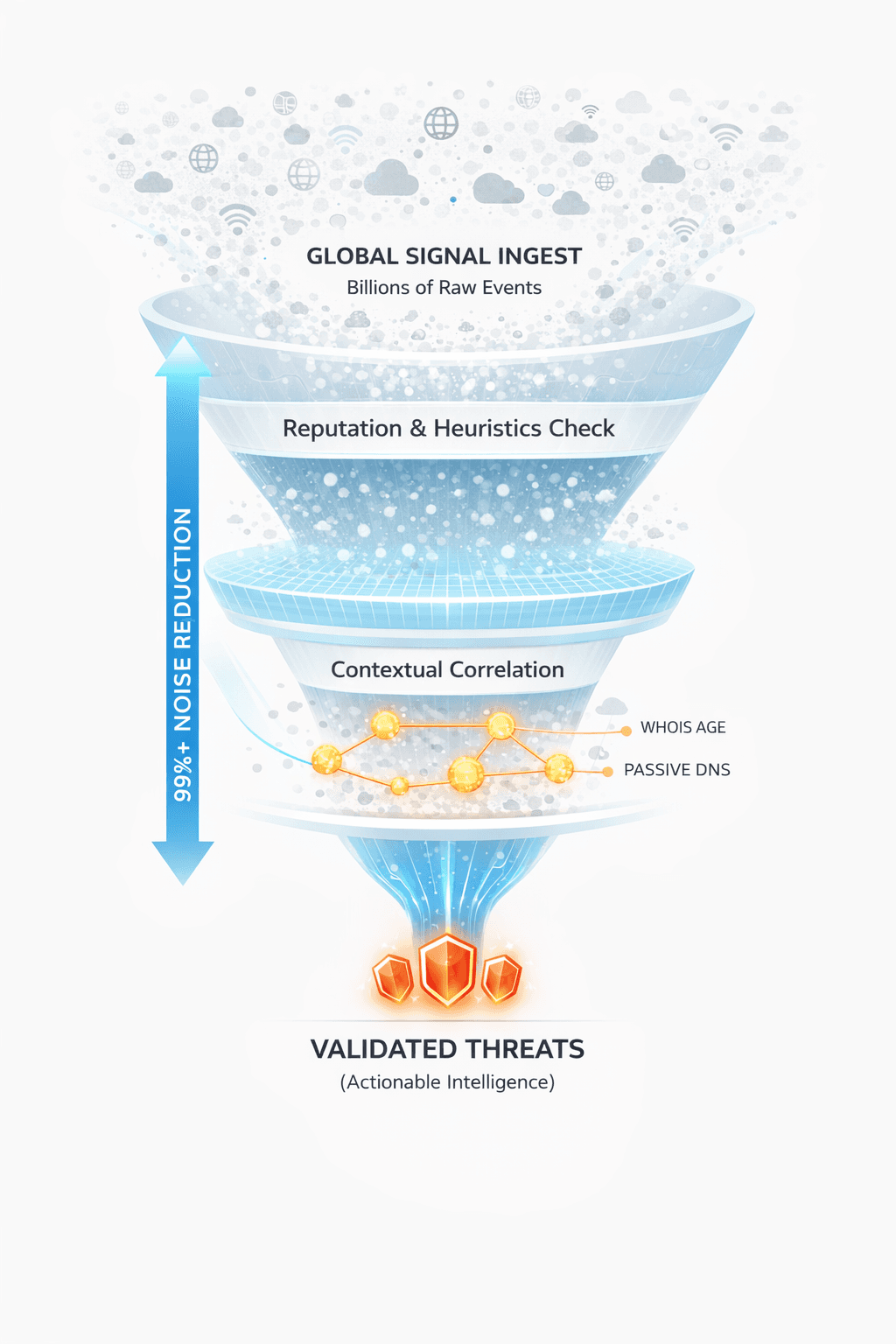
Datazag's four-stage verification cuts through the noise — every alert is checked against DNS, infrastructure, website content and a final adjudication pass, so your team focuses on real threats, not dead ends.
The average SOC deals with 10,000+ alerts daily, with false positive rates exceeding 50%
Security teams waste 40% of their time investigating false positives" (Source: Ponemon Institute)
Four independent checks before an alert reaches your queue
Each phishing candidate receives a dynamic risk score. If it is high, you get an alert. Low-risk candidates remain monitored and if the score changes later in the day then it will trigger instant escalation. That way we can reduce the clutter for you.
Comprehensive threat coverage beyond phishing
Phishing & Credential Harvesting
What we detect
- Lookalike domains targeting your brands
- Login page clones
- Credential harvesting forms
- Brand impersonation
- Typosquats and combosquats
Why it matters
Phishing is the #1 initial access vector. Detecting during infrastructure setup prevents credential theft before customers are targeted.
Detection Methods
- Visual similarity analysis (screenshot comparison)
- Brand keyword matching
- Infrastructure validation
- Domain age analysis
Business Email Compromise (BEC)
What we detect
- Executive impersonation domains
- Spoofed sender infrastructure
- Finance team targeting
- Vendor impersonation
Why it matters
BEC attacks cost enterprises $43B+ annually. Detection before spoofed emails are sent prevents wire fraud.
Detection Methods
- Executive name monitoring
- Mail infrastructure mismatch
- Sender validation
- Domain pattern analysis
C2 & Malware Infrastructure
What we detect
- Command and control domains
- Malware distribution sites
- Ransomware callbacks
- APT infrastructure
Why it matters
C2 domains are set up before malware campaigns. Early detection enables proactive blocking.
Detection Methods
- Infrastructure pattern matching
- Bulletproof hosting detection
- CNAME chain following
- Known malware family patterns
Fraud & Scams
What we detect
- Payment fraud sites
- Crypto wallet draining
- Tech support scams
- Invoice fraud
Why it matters
Fraud infrastructure is built before campaigns launch. Detection during setup prevents financial losses.
Detection Methods
- Payment form detection
- Generic "secure" branding
- Disposable infrastructure
- High-risk hosting providers
What We deliver
High-Confidence Alerts
Four-stage verification through multi-signal analysis. Only investigate real threats.
Complete Forensic Context
Every alert includes screenshots (for phishing), WHOIS, DNS records, hosting intel, mail infrastructure - everything needed to take immediate action.
SIEM Integration
Native connectors for Splunk, Microsoft Sentinel, Elastic, Google Chronicle, IBM QRadar. Alternatively , we can provide JSON alerts via Webhook, Email, Slack or Teams.
FAQ
How is this different from traditional threat intel?
Traditional feeds update 8-12 hours after attacks launch (reactive). We detect during infrastructure setup before attacks launch (predictive) - Hour 0-2 vs. Hour 8-12.
Do you provide a takedown service?
We do not provide a takedown service. However, we do provide a ready to go evidence package that provides all the information required for a successful takedown by your team This package includes a screenshot of the attackers website showing any brand logos together the the email address for the regsistrar who can take down the domain. We also provide the complete incident report detailing the attacker's infrastructure and reasons why the domain is malicious.
How do you keep false positives low?
Every alert must survive four independent checks — DNS profile match, infrastructure risk, a website check and a final adjudication pass over the full evidence — before it reaches you. We don't alert on single signals.
What's the detection latency?
Typically we achieve Sub-60 seconds from SSL certificate issuance (final infrastructure setup step) to alert in your SIEM. As we are utilizing open source data feeds and we are transmitting data to your servers there may be small delays outside our control.
How many brands can we monitor?
Plans are available for 10, 25, 50, or 100+ brands. Volume pricing available. Our definition of a brand is the public brand name together with any variations such as typos, misspellings, lookalike or homoglyph spoofing.